
TECHNICAL SHEET
Année : 2021
Maitre d’Ouvrage : SEMANAH
Maitre d’Ouvrage Délégué : Unite de Coordination du Programme de Formation Professionnelle (UCP-FP)
Financement : Banque Caraïbéenne de Développement
- Built
- 1 auditorium.
- 1 bâtiment administratif.
- 6 dortoirs.
- 1 réfectoire.
- 2 édifices pour salles de cours.
- 3 ateliers de formation technique.
- 1 salle de simulation.
- 2 Hangars à bateaux.
- Blocs sanitaires.
- 1 centre de contrôle de panneaux solaires et un abri pour batteries.
- 1 piscine d’entraî
- 1 embarcadère.
- 1 poste de pompage d’eau souterraine.
- 11,128 m2 d’emprise au sol
- 34,796 m2 d’aménagement paysager
- 7,796m2 de Terrains de Jeux
- 3 sports fields (football and basketball)
- 8,027 m2 d’espaces laissés au naturel
- 10,480 m2 de voies carrosables
- 4,702 m2 de voies piétonnières
- 7,796m2 de Terrains de Jeux
CONTEXT
Le projet de la création de l’Institut National de Formation aux Métiers de la Mer (INFMM) exprime la volonté de l’État haïtien d’enclencher, sur une base durable, un processus de structuration, de capitalisation, de rationalisation de l’exploitation du secteur maritime par la formation du capital humain nécessaire. L’INFMM a comme finalité de favoriser le développement des ressources humaines devant permettre d’améliorer les conditions essentielles de productivité, de compétitivité, et de création de richesses dans le secteur économique de la mer.
Following a call for tender process launched by the UCP-FP in July 2020, GROUPE TRAME S.A. was awarded the contract for the Architectural and Structural Studies of the Construction Project of the National Institute for Training in Maritime Professions in February 2021.
THE PROJECT
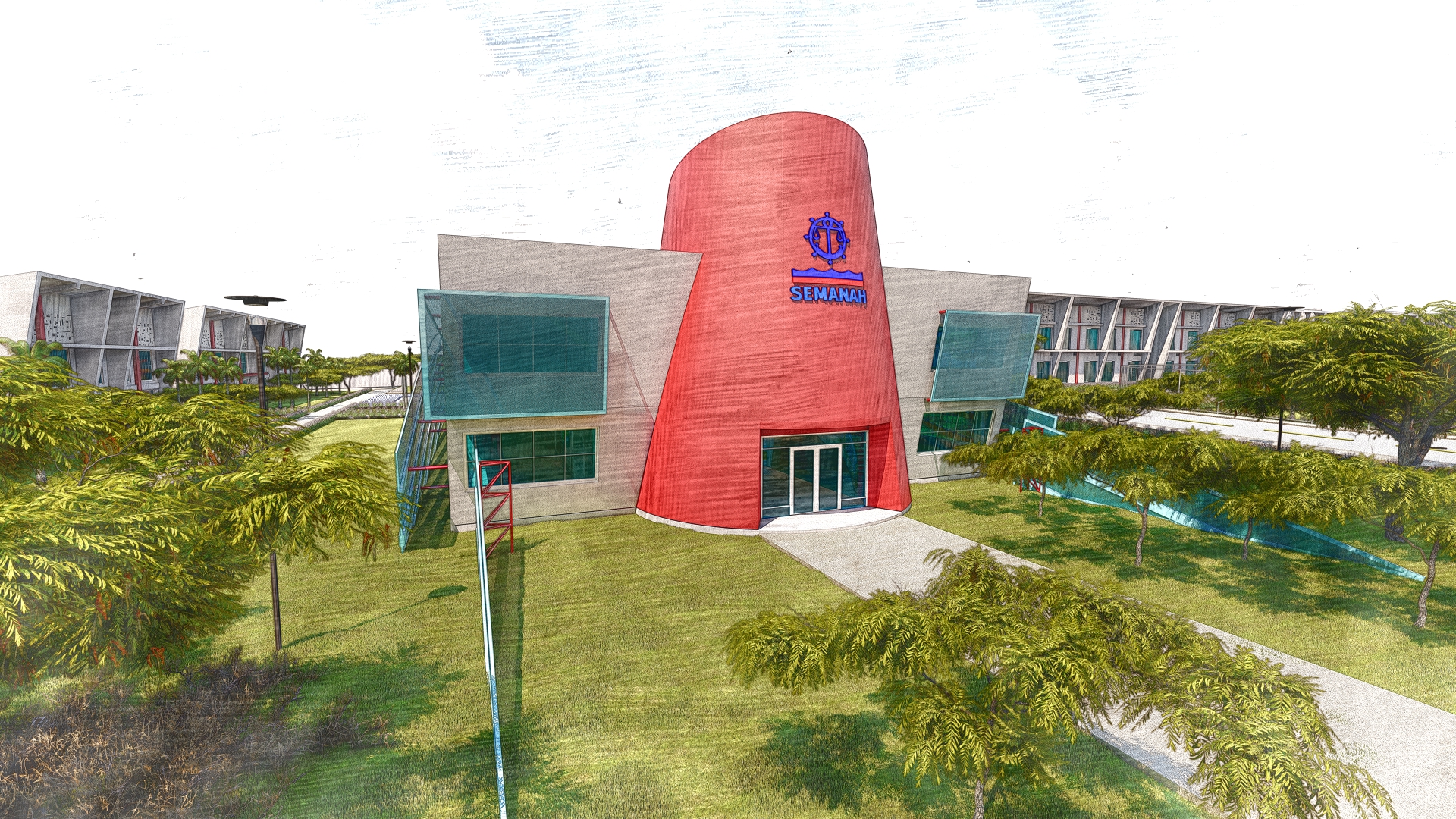
The campus of the National Institute for Training in Maritime Professions is a group of 20 buildings of different sizes spread over a trapezoidal-shaped coastal site with an average slope of 3% in the southwest direction descending towards the sea.
The land's exposure to flooding and marine erosion risks has led to the removal of buildings nearly 100 meters from the coastline, to higher plateaus than those surrounding the beach. Thus, sports facilities (playing fields), which will be less susceptible to damage, are located to the southwest, i.e. closer to the coast.
CONTEXT
The campus of the National Institute for Training in Maritime Professions is a group of 20 buildings of different sizes spread over a trapezoidal-shaped coastal site with an average slope of 3% in the southwest direction descending towards the sea.
The land's exposure to flooding and marine erosion risks has led to the removal of buildings nearly 100 meters from the coastline, to higher plateaus than those surrounding the beach. Thus, sports facilities (playing fields), which will be less susceptible to damage, are located to the southwest, i.e. closer to the coast.
The campus of the National Institute for Training in Maritime Professions is a group of 20 buildings of different sizes spread over a trapezoidal-shaped coastal site with an average slope of 3% in the southwest direction descending towards the sea.
The land's exposure to flooding and marine erosion risks has led to the removal of buildings nearly 100 meters from the coastline, to higher plateaus than those surrounding the beach. Thus, sports facilities (playing fields), which will be less susceptible to damage, are located to the southwest, i.e. closer to the coast.
L’approche Conceptuelle
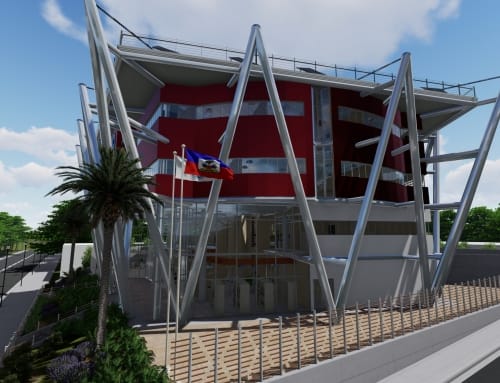
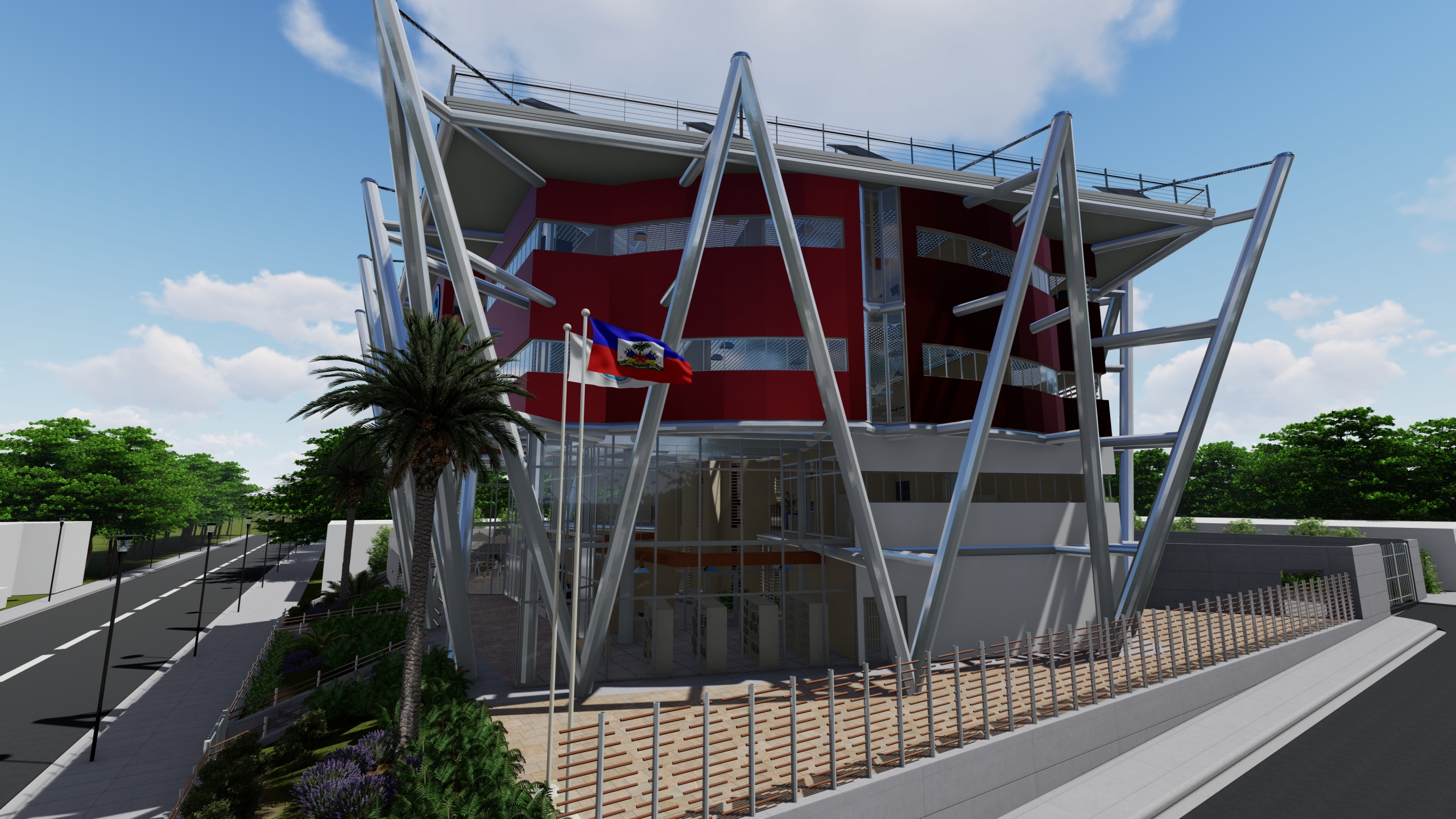
Du dehors, ce qui frappe au prime abord c’est la colonnade périphérique constituée de tubes d’acier structural inclinées vers l’extérieur rappelant un exosquelette qui répond à la volonté de placer la structure métallique et les composants techniques au centre du concept du bâtiment.
Le geste architectural s’inspire à la fois du mouvement des vagues de la mer et de la structure des bateaux (coque, cheminée, lucarne etc…) .


Hello