Project Description
TECHNICAL SHEET
- Year : 2021
- Project Owner: SEMANAH
- Delegated Project Owner: Vocational Training Program Coordination Unit (UCP-FP)
- Financing: Caribbean Development Bank
Built
- 1 auditorium
- 1 administrative building
- 6 dormitories
- 1 refectory
- 2 buildings for classrooms
- 3 technical training workshops
- 1 simulation room
- 2 boat sheds
- Sanitary blocks
- 1 solar panel control center and battery shelter
- 1 training pool
- 1 pier
- 1 groundwater pumping station
Ground area and developments
- 11,128 m² of ground area
- 34,796 m² of landscaping
- 7,796 m² of playgrounds
- 3 sports fields (football and basketball)
- 8,027 m² of natural spaces
- 10,480 m² of driveways
- 4,702 m² of pedestrian walkways
CONTEXT
The creation of the National Institute for Training in Maritime Professions (INFMM) expresses the desire of the Haitian State to initiate, on a sustainable basis, a process of structuring, capitalization, and rationalization of the exploitation of the maritime sector through the training of the necessary human capital.
The INFMM aims to promote the development of human resources to improve the essential conditions for productivity, competitiveness and wealth creation in the maritime economic sector.
Following a call for tender process launched by the UCP-FP in July 2020, GROUPE TRAME S.A. was awarded the contract for the Architectural and Structural Studies of the Construction Project of the National Institute for Training in Maritime Professions in February 2021.


THE PROJECT
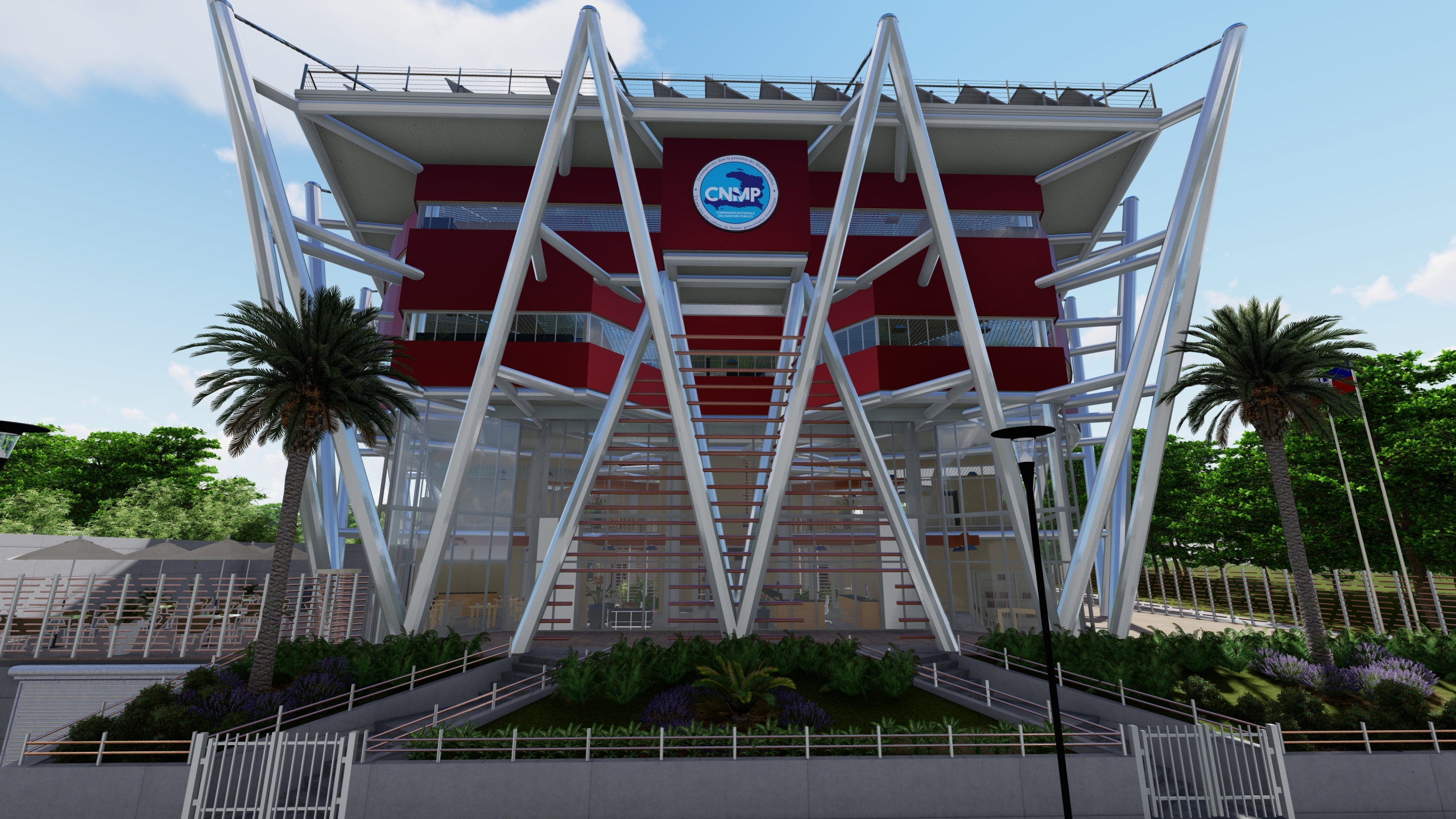
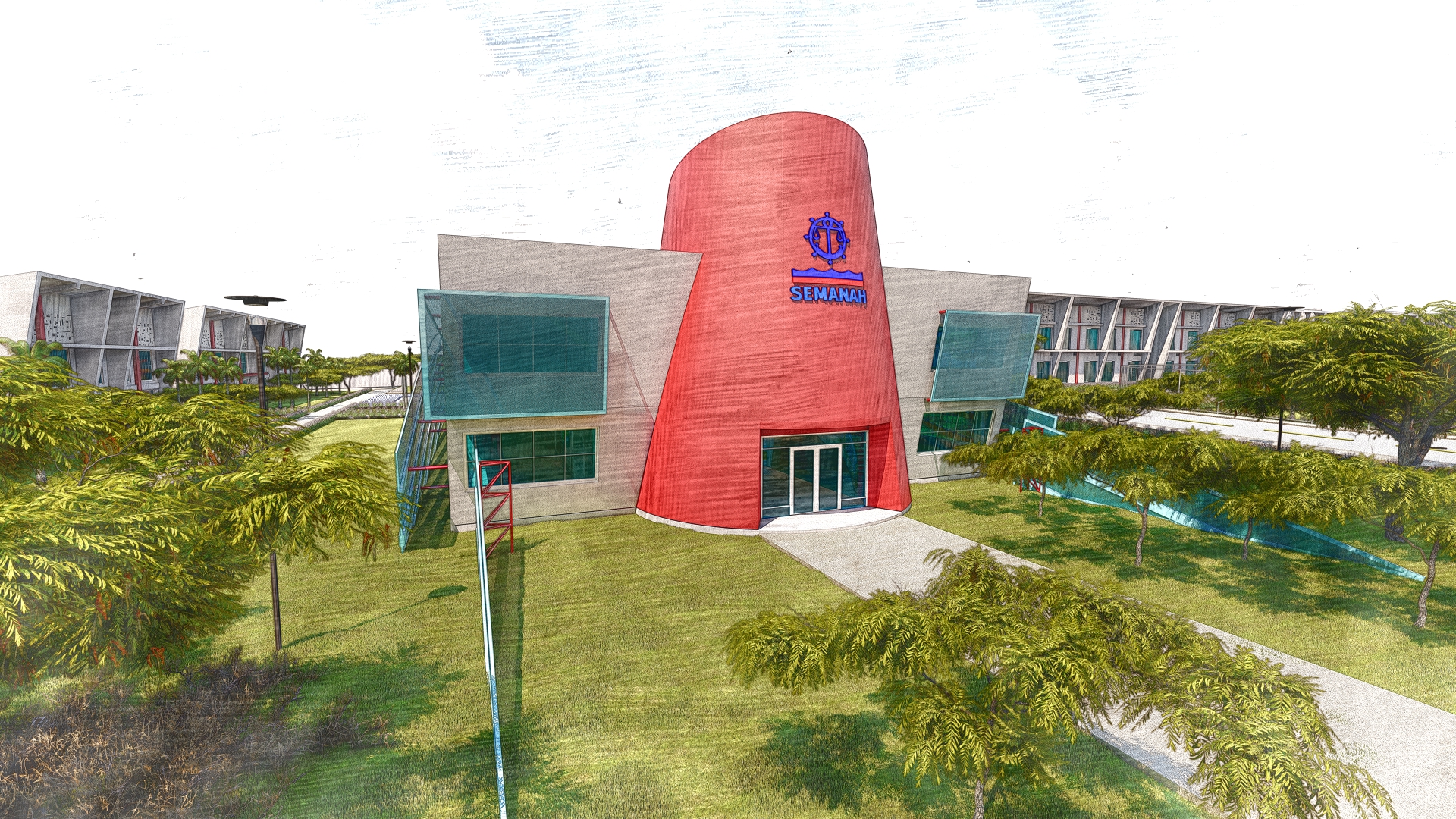
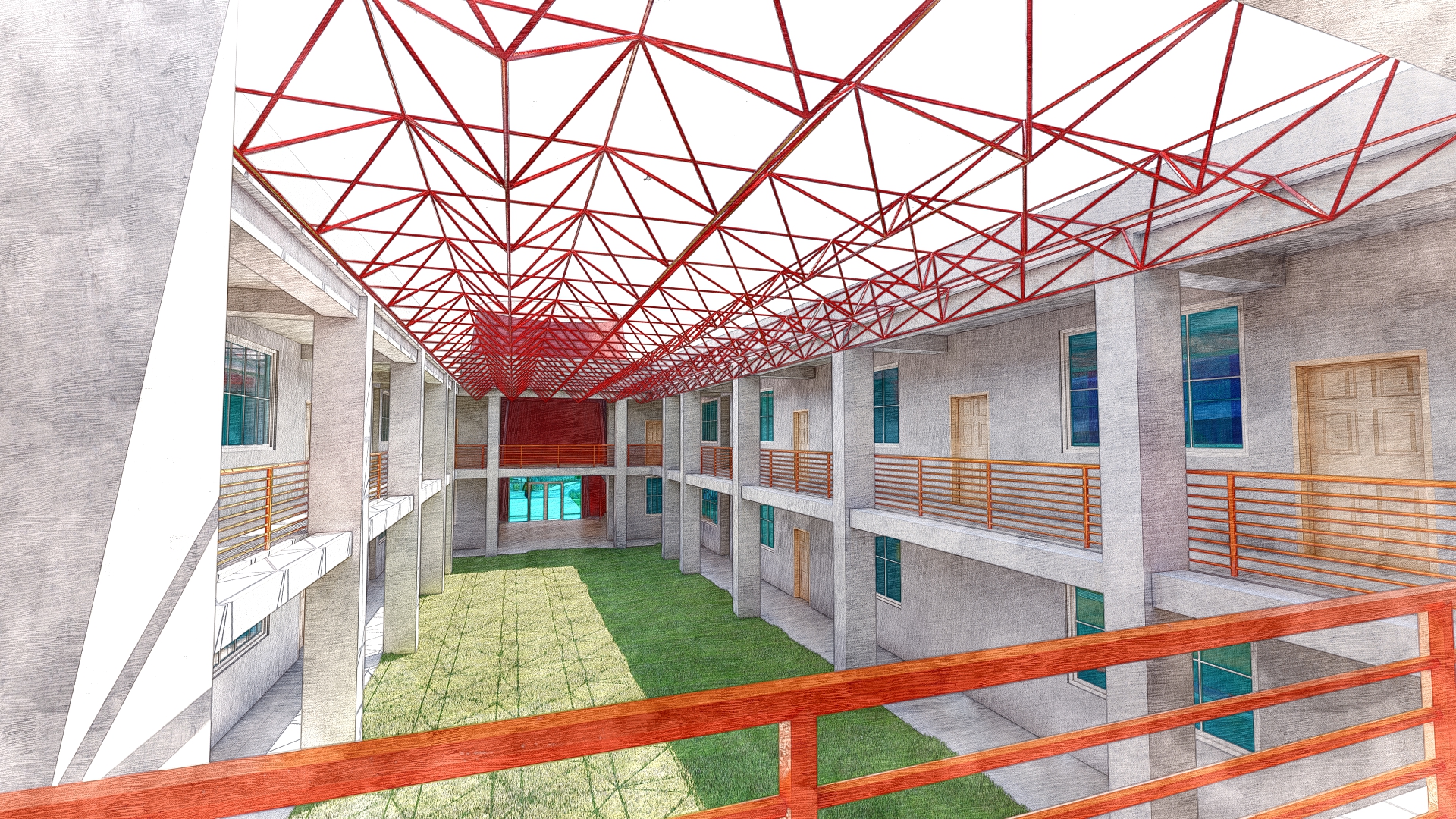
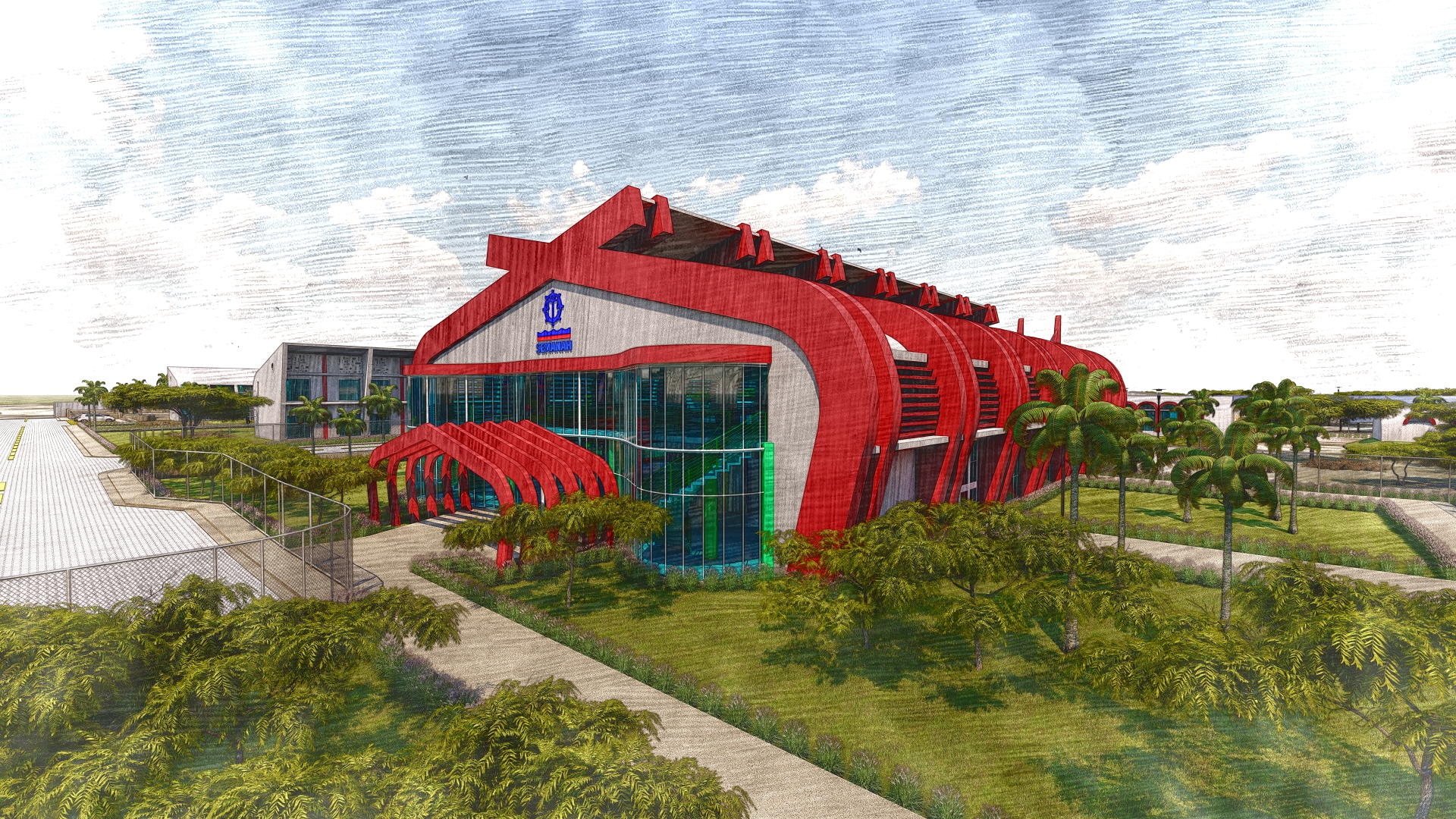
The campus of the National Institute for Training in Maritime Professions is a group of 20 buildings of different sizes spread over a trapezoidal-shaped coastal site with an average slope of 3% in the southwest direction descending towards the sea.
The land's exposure to flooding and marine erosion risks has led to the removal of buildings nearly 100 meters from the coastline, to higher plateaus than those surrounding the beach. Thus, sports facilities (playing fields), which will be less susceptible to damage, are located to the southwest, i.e. closer to the coast.